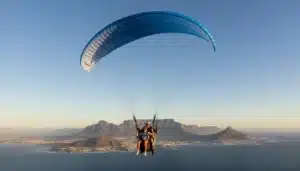
Paragliding is a relatively niche sport, but there are a surprising number of choices out there when it comes to paragliding helmets. They range from helmets that wouldn’t look out of place on a motorcycle ride to helmets you might see at a Daft Punk concert. So what should you buy? To help you choose the best paragliding helmet, we broke them down into a few crucial factors.
1. Open Face, Visor, Or Full Face Paragliding Helmet?
There are two basic shapes to helmets: open face and full face. Open-face helmets are shaped like traditional bike or motorcycle helmets. Full-face helmets have an extra bar across the chin.
There are pros and cons to each shape. People who prefer open-face helmets say that they give a wider range of vision and create less neck fatigue, thanks to their lightweight.
Full-face helmets, on the other hand, offer more direct protection to the face in case of collision but are heavier. Full-face helmets also tend to reduce wind noise more. Reduced noise can help if communicating with a radio during flights.
Many helmets come with a visor, which is often detachable. These can help reduce wind and sun, just like ski goggles. But many pilots who judge their speed by the sound and feel of the wind on their faces and in their ears actually find the added wind protection of full-face helmets and visors to be negative.
In the end, shape is a matter of preference. But no matter which shape you pick, make sure the opening is shaped so that it doesn’t reduce your peripheral vision too much. Being able to see and avoid fellow paraglider pilots, hang gliders, or other aircraft – not to mention mountains and cliffs – is of course extremely important.
2. Paragliding Helmet Size?
This is probably the most important factor in choosing a helmet. If it’s too small, it will be uncomfortable. If it’s too big, it may obstruct your vision. Having the wrong size helmet, big or small, also means you will not be as safe as you should be. Here’s how to make sure the helmet is the right size: put it on and fasten the chinstrap. If you feel continuous pressure somewhere on your head, the helmet is probably too small. Move your head around in all directions. If the helmet falls over your eyes, if you can feel it sliding, or if it begins to slip off when you look down, then it’s too big.
Some helmets have removable padding, which can help you adjust and customise the size to your head.
3. Certification
Any helmet you buy should conform to EN 966 standards. EN 966 are the European standards that specify how flight helmets should stand up to impacts and how to test for that (basically, they drop big anvils on the helmets). EN 966 applies specifically to flight helmets – there are other standards for different sports. Remember: if you’re going to be paragliding, buy a paragliding helmet. It may seem tempting to buy a motorcycle or ski helmet because these are easier to find. But that can be dangerous. A motorcycle helmet is designed specifically for motorcycle impacts – it won’t protect you as well in a paragliding accident. A helmet is there to protect you, after all, so make sure to get one that will really do the job.
4. Material
The helmet should have two hard layers: an outer shell and an inner shell. The outer shell is usually made of thermoplastic, composite fibre, or Kevlar, combined with carbon fibre. The inner shell is designed to absorb most of the shock in the event of a collision. It’s also more fragile, so check this part carefully for dents or bends. The inner shell is usually made of expanded polystyrene.
5. Colour
You have to have some fun, after all! Just remember that while black always looks cool, it might not feel so cool when you spend a few hours trapped inside it under the blazing sun.
Choosing the Best Paragliding Helmet for Safety and Comfort
Finding the best paragliding helmet involves considering design, fit, certification, materials, and colour. A quality helmet not only improves safety but also improves comfort during your flights. By choosing a paragliding helmet that meets EN 966 standards and suits your personal preferences, you’ll be well-equipped to enjoy the thrill of paragliding with confidence.
FAQs
Open face helmets provide a wider field of vision and are lighter, while full face paragliding helmets offer added protection and reduce wind noise. The choice often depends on personal comfort, communication needs, and flying conditions.
The right size should fit snugly without causing pressure points. If the helmet slides or shifts when you move your head, it’s too large. Some paragliding helmets include adjustable or removable padding for a customised fit.
EN 966 certification means the helmet has been tested for aviation use and meets strict safety standards for flight impacts. Always check that your paragliding helmet meets this certification to ensure proper protection.
Quality paragliding helmets use a durable outer shell made from thermoplastic, carbon fibre, or Kevlar, combined with an inner polystyrene shell that absorbs shock. Inspect both layers carefully for any dents or cracks before flying.
Yes, darker colours like black can absorb more heat, which may make your helmet uncomfortable in direct sunlight. Choosing a lighter-coloured paragliding helmet helps reflect heat and keeps you cooler during long flights.